- More of your customers now ask AI (ChatGPT, Gemini, Perplexity) who to trust, not just Google. If AI doesn't name you, you're not on the shortlist.
- New research from Similarweb shows getting named in AI lifts your branded searches and direct website visits, not only AI referrals. It's measurable in the tools you already have.
- You don't have to be the biggest. Right now a Gold Coast or Brisbane business can out-rank bigger brands in AI answers, but the window narrows as the space fills up.
- We track whether AI is naming you or your competitors, then build the content, schema and trust signals that get you cited.
Let me start with a simple question. When you go looking for a new product, a service, or somewhere to take the family this weekend, where do you start your search?
For a long time the answer was Google. Then it became Google and social, YouTube included. Now, for more and more of us, it's Google, social and AI. You might use all three. But if you started in AI, the same thing happens as when you start on social media: you end up looking at the brands AI puts in front of you. So here is the question that matters for your business. When AI recommends someone in your category, do you come up?
I'm asking because your customers here on the Gold Coast, and up in Brisbane, are already doing this. They're asking ChatGPT, Gemini and Perplexity the questions they used to type into Google, and they're getting back a short list of businesses to trust. If you're not on that list, to that buyer you may as well not exist.
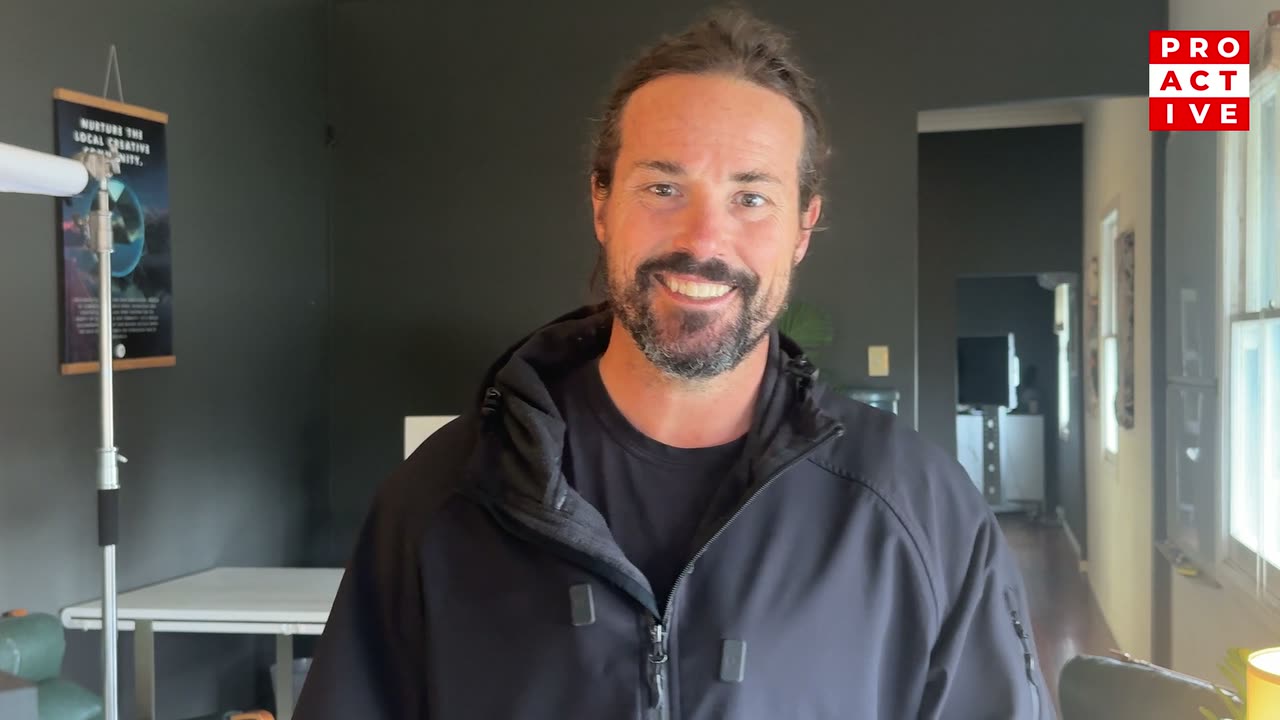
What AI search visibility is, and why it matters for Australian businesses right now.
Search is splintering. Again.
I've watched this happen more than once in thirty years of marketing. Google was the big winner of search in the early days. Then social media arrived, YouTube with it, and the ground moved. Now AI is the newest place search has split into, and a fast-growing one.
The lesson from each of those shifts is the same. If your brand wasn't showing up in the new place, and showing up prominently, you weren't getting found. That was true when social came along, and it's true again now.
The part that's been hard: you can't see if you're showing up
Here's the catch that's caught most business owners out. On Google and on social, you can get a rough sense of whether you're turning up. In AI, you've been flying blind. There's been a genuine lack of visibility on whether or not AI is recommending you, and on who it's recommending instead.
That's the first problem to solve, knowing where you stand. Who's out-ranking you, who's getting all of the love, and for which questions. You can't fix what you can't measure.
New research: getting named in AI does more than you'd think
This is the part I want you to sit with, because it changes how you should measure the whole thing.
New research from Similarweb, unpacked recently by Rand Fishkin at SparkToro, looked at what happens after an AI recommends a brand. The interesting finding is that people often don't click the link inside the AI answer. Instead they take the name AI gave them, go back to Google or straight to the website, and check the brand out for themselves.
So the payoff from AI visibility doesn't always land as an obvious 'AI referral' line in your analytics. It shows up as a lift in branded searches and direct visits. In the study, when AI started recommending them, American Express saw around a 7.2 per cent lift in site visits and Capital One around 14.2 per cent. A chunk of what used to be search traffic simply became direct traffic instead.
I'll be straight with you about the honest limits, because Rand was too. That research is aggregate data on large consumer brands, not a Burleigh Heads plumber, so the exact numbers won't map one to one onto a small local business. And traditional search is still far bigger than AI today, by a wide margin. What the research proves is that the mechanism is real, and that it's measurable in the tools you already have. The size of it for your business is the thing worth going and checking.
You don't have to be the biggest. You have to move first.
Here's why I'm telling Gold Coast and Brisbane business owners to pay attention now rather than later.
In this new space, how big your brand is matters far less than how well your page answers the question being asked. A small business can genuinely out-rank the giants if its page is the better, clearer answer. Even if you're not ranking on the first page of Google, there's a window right now where you can out-rank bigger competitors inside the AI answers. You don't have to be number one on Google. You just have to be the one making the most noise in your category.
That window won't stay open. Like every space in search before it, this one will get crowded, and the early movers win the biggest slice. First-mover territory is exactly that, a head start that gets harder to claim once everyone piles in.
What actually decides who AI names
It's not magic, and it's not that different from good SEO. It just has its own flavour. In plain terms, when AI can't fully answer a question from memory, it runs a web search, pulls back a batch of pages, and cites the ones that answer the exact question most clearly. A few things tip the odds your way.
- Content that answers the real question, head on, the way a good 'best X for Y' article does.
- Structured data and schema, so machines can read cleanly what you do and how you're rated.
- Trust signals, meaning what other credible sites and reviews say about you, not just what you say about yourself.
- Recency, because the models lean towards current content and often add the year to their own searches.
- Local intent, so you target the Gold Coast or Brisbane version of the question, not just the global one.
Do that consistently and you start turning up. The operative word is consistently. Like SEO, and like social before it, if you're not creating the content, you're not going to show up.
SEO isn't dead. It's all connected now.
Let me put this one to bed, because I hear it a lot. SEO isn't dead. Your website still needs good structure, few errors and clear answers to rank on Google and to be quoted by the AI. And remember what the research showed, people leave the AI answer and go back to Google to vet you. If you're invisible there, you lose them at the last step. You want to be strong in both, and the two feed each other.
GEO, AEO, LLMO. Or plainly, AI search visibility.
You'll hear a few acronyms thrown around for this work. GEO is generative engine optimisation. AEO is answer engine optimisation. LLMO is large language model optimisation. They're all pointing at the same job, being the business that gets named when AI answers the question. I just call it AI search visibility, because that's what it is.
The honest part: how long, and what it costs
The first question is always what it costs, and the honest answer to how long is that it depends. I'm not going to tell you it's days. But I'll tell you what I'm seeing. Old-school SEO would take three to six months before you saw much. Right now, with the space still early, brands are showing up in AI search, and getting traffic from it, faster than almost any organic activity I've watched deliver in thirty years. The detail sits on our AI search visibility page, and the price is set in writing when you book. I've done my best to answer every question there.
Why you're hearing this from a Gold Coast agency
I run PROACTIVE Co out of Burleigh Heads, and I work with businesses across the Gold Coast, up into Brisbane, and anywhere in Australia that wants the help. Thirty years in marketing means I've lived through these technology shifts, and I've been on the receiving end of one. Our own business was disrupted, and we rebuilt around the change rather than pretending it wasn't happening.
So I'm not reading this off a slide. I've run the play, I use AI every day to do it, and I'd rather help you get ahead of this while the window is open than explain later why a competitor got there first.
You don't have to be the biggest business in your category. You have to be the first one AI learns to recommend.
Common questions
What is AI search visibility?
It's how often, and how well, your business is named when people ask AI engines like ChatGPT, Gemini or Perplexity for a recommendation. You'll hear it called GEO or AEO. It comes down to getting named when AI makes the recommendation.
Can a small Gold Coast or Brisbane business show up in AI search?
Yes. In AI answers, how well your page answers the exact question matters more than how big your brand is, so a smaller local business can out-rank larger competitors. This is first-mover territory, and it's easier to claim now than once the space gets crowded.
How long until my business shows up in AI search?
It varies by category, and it isn't instant. Google usually has to index your content before a model will cite it. Because the space is still early, though, brands are showing up faster than traditional SEO has typically delivered.
See where you stand in AI search
Find out whether ChatGPT, Gemini and Perplexity are naming you or your competitors on the Gold Coast and in Brisbane. Start with an audit, or a fifteen minute call, and we'll show you where you stand and what to do about it.
Explore AI Search Visibility →